city
Commercial Storefront Glass & Entrance Installation in Chicago, IL

Commercial Storefront Glass & Entrance Installation in Chicago, IL

Your storefront entrance is the one part of your building every single customer touches — and in Chicago it works harder than almost anything else you own. Apex Window Werks installs aluminum storefront systems, frameless glass entrances and commercial glass doors for retail, office, restaurant and mixed-use properties across Chicagoland, with fitting scheduled outside your trading hours.

From high-cycle frontages in the Loop to recessed doorways in neighborhood strip malls, we survey, specify, fabricate and commission the complete system — framing, glass, hardware and thresholds — so your entrance opens smoothly, seals tightly and meets ADA requirements from day one.

Why Choose Our Storefront Installation Services?

  • Minimal downtime: we measure and order first, then install outside business hours so your entrance stays usable.
  • Complete scope: aluminum framing, tempered and laminated glass, entrance doors, closers, panic hardware and thresholds.
  • Built for Chicago winters: thermally broken framing and corrosion-resistant details that stand up to road salt and freeze-thaw cycles.
  • Local & accountable: one Chicago crew handles survey, fabrication, interim security, installation and commissioning.

Get your storefront project moving — contact Apex Window Werks for a free estimate today.

Contact Us
By providing a telephone number and submitting the form you are consenting to be contacted by SMS text message. Message & data rates may apply. Reply STOP to opt out of further messaging.

The ProblemThe Entrance Fails First — and Gets Budgeted Last

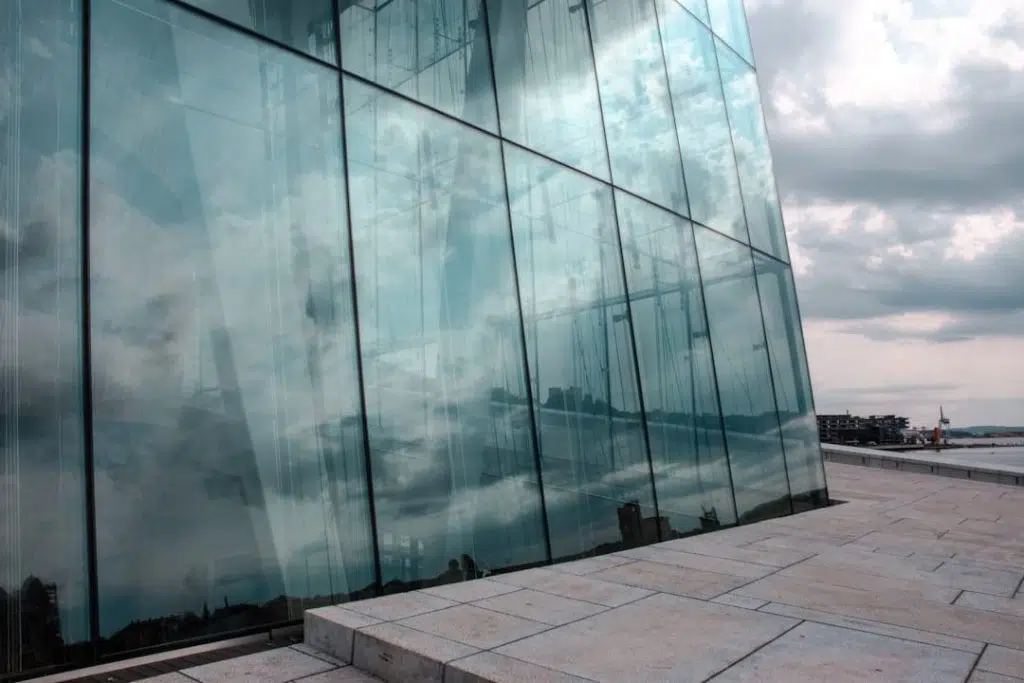
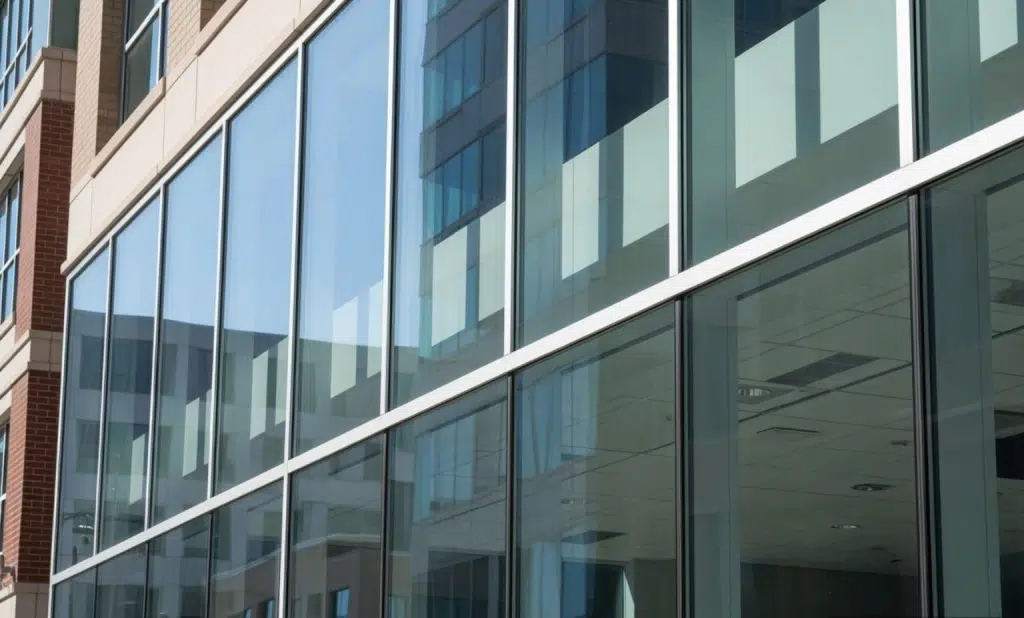
Commercial storefront glass installation in Chicago, IL

A commercial entrance is the busiest moving assembly in the entire building. Every arrival loads the pivots, the closer, the lock stile and the threshold — and on a busy Chicago retail frontage that can mean several thousand cycles a day. Yet when budgets are written, the entrance is usually the last line item anyone thinks about, right up until the day it stops closing.
Chicago adds its own pressures. Public-facing entrances must maintain an accessible route: a minimum 32-inch clear opening, a threshold no higher than half an inch, and hardware that can be operated with one hand. An entrance that drifts out of alignment doesn’t just annoy customers — it can quietly fall out of ADA compliance.

The climate does the rest. Aluminum conducts cold aggressively, so an uninsulated storefront frame will sweat on the inside through a January cold snap, streaking glass and pooling water on the sill. And the road salt spread across Chicagoland sidewalks every winter wicks into the bottom rails of doors and framing, where it corrodes the metal from the inside out. Corroded bottom rails are the single most common reason we’re called to replace a commercial door in Chicago.

None of this is hypothetical for a Chicago business owner. An entrance that binds in the cold slows your busiest hours; a fogged sidelite makes a well-kept store look tired; a threshold that traps water becomes a slip hazard the moment temperatures drop. The good news: every one of these failures is predictable — and most are preventable when the system is specified for the traffic and climate it will actually face. That specification, not the brand name on the glass, is what separates a storefront that lasts twenty years from one that fails in five.

Same-Day Emergency Glass Repair in Chicago!

Broken storefront glass? We secure the opening the same day and replace the glass as soon as it’s fabricated — call our Chicago team now.

Our ApproachWhat a Commercial Storefront System Is Actually Made Of

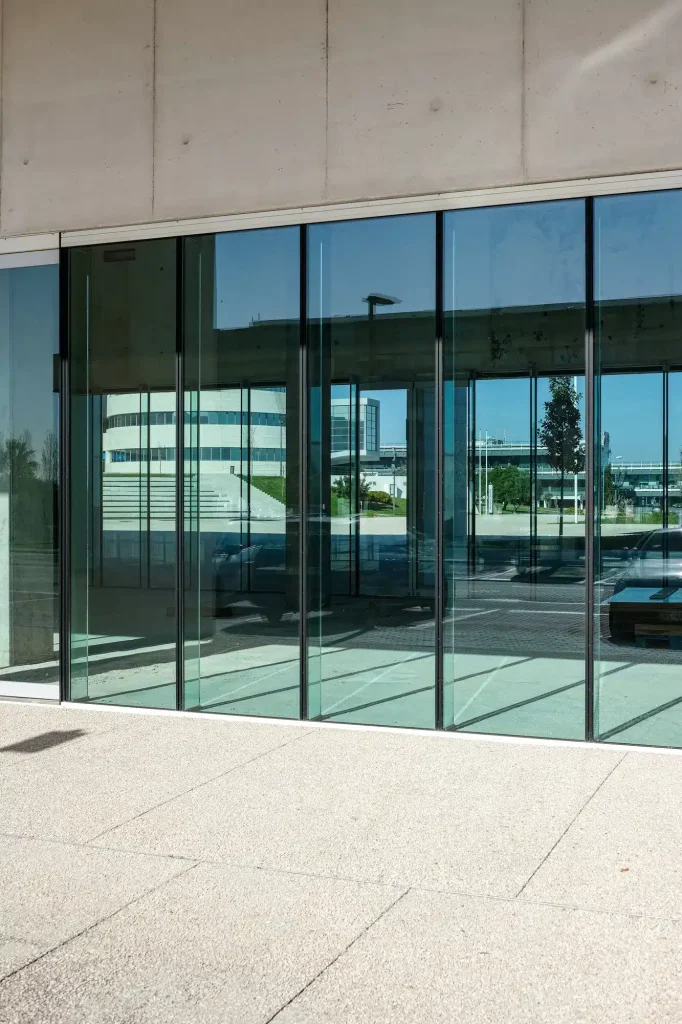
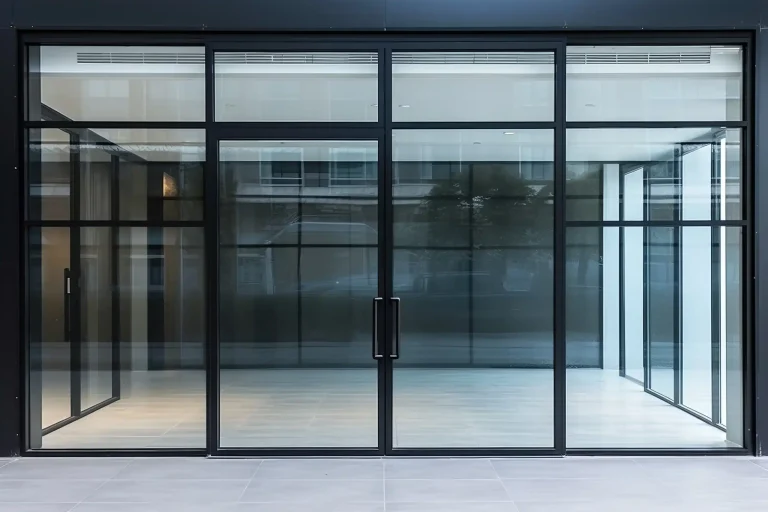
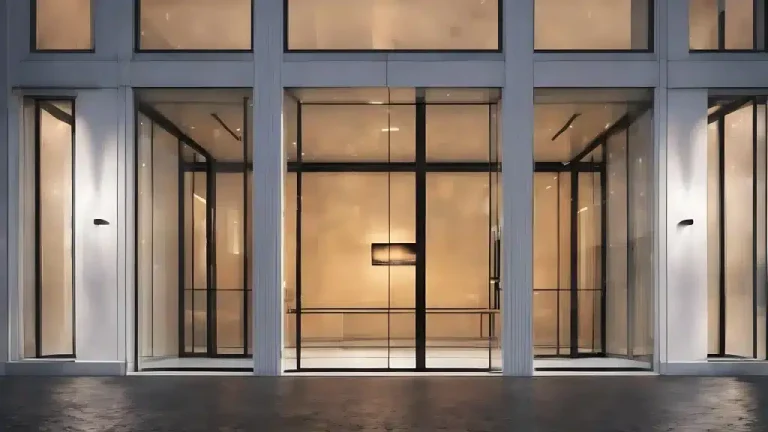
Frameless glass entrance doors of a commercial building

A storefront looks like a wall of glass, but structurally it’s a grid. Vertical mullions and horizontal rails form the framework, with concealed drainage channels that carry water out of the system before it reaches your interior. The glass sits in glazing pockets, held by gaskets or wet seals, and the entrance door hangs in its own dedicated frame set within that grid — it never relies on the glazing bays around it.

Doors themselves are specified by stile width. Narrow stiles look sleek and suit showrooms and offices; medium and wide stiles carry more hardware and shrug off the abuse of a high-traffic restaurant or retail entrance. Choosing stile width by appearance instead of traffic is how a beautiful door ends up sagging within a year.

Around the leaf hangs the hardware schedule: pivots or hinges, an overhead or concealed closer, panic hardware for egress, the threshold, the lock and the pulls. Every one of those items has a duty rating, and the whole system is only as durable as its weakest component. Getting the specification wrong is the most expensive mistake in a storefront project — which is why we put it in writing, item by item, before anything is fabricated.

Why does this anatomy matter to you? Because when a component fails, the right repair depends on knowing which part of the system carried the load. A cracked panel is a glazing job; a sagging leaf is a hardware job; water on the sill is usually a drainage job. Diagnosing at the component level keeps repair costs proportionate — and when we do install a complete new system, every component is chosen for the duty it will actually see, from the mullion depth to the closer’s spring size.

Six Storefront Failures We See Across Chicagoland

Storefront systems rarely fail all at once — they fail one component at a time. These are the six problems we’re called out for most often across Chicago:

Dropped or Binding Door Leaf

Pivots and hinges wear until the leaf drops out of square, scraping the threshold or binding against the frame. Beyond the noise and effort, a dragging door can narrow the clear opening below accessible width — a compliance problem, not just a maintenance one.

Corroded Bottom Rails

White oxide blooming along the bottom of a door or frame is salt and meltwater doing their work. Once corrosion starts inside the rail it spreads out of sight, and by the time fasteners lose their grip the leaf usually needs replacing. In Chicago’s salt-heavy winters this is failure number one.

Failed Perimeter Gaskets

Gaskets harden and shrink with age and UV exposure. When they pull back from the corners, wind-driven rain follows the glass down into the framing, and cold air pours through the gaps — you’ll feel it standing at the register in February.

Closer & Panic Hardware Faults

A door that slams, drifts, or fails to latch has a closer problem; panic hardware that needs two motions to release has a code problem. Both are usually adjustable or replaceable without touching the rest of the system — if they’re caught early.

Cracked or Delaminated Panels

Thermal stress, edge damage from the original installation, or an impact can crack a tempered panel or delaminate a laminated one. Individual panels can be replaced and matched for tint, thickness and coating without rebuilding the surrounding bays.

Threshold & Water Ingress

When drainage channels clog or a threshold sits proud of the accessible half-inch limit, water finds its way inside and pedestrians find something to trip on. Correct threshold height and clear weep paths solve both problems at once.

The FactorsTraffic Volume Predicts Which Entrance Fails First

High-traffic commercial entrance with glass doors

Which entrance fails first? Almost always the one that cycles the most. A professional office in the West Loop might see two hundred openings a day, spread evenly from nine to five. A coffee shop on a busy Chicago corner can see several thousand — concentrated into morning and lunch rushes that hammer the closer and pivots while the hardware is still cold.

Exposure compounds the load. An entrance recessed under a canopy lives a gentler life than one standing flush on an exposed corner, catching wind off the lake, driven rain and salt spray from the street. When we specify a system, cycle count and exposure are the first two numbers on the sheet — they decide stile width, hardware duty rating and glass type before aesthetics enter the conversation.

This is also why two identical-looking storefronts age so differently across Chicagoland. A recessed entrance in a Naperville office park can run twenty years on routine adjustments, while the same door on an exposed Wicker Park corner needs new pivots and a closer inside seven. When we quote, we tell you which trajectory your entrance is on — and which specification changes would move it to the longer one.

Downtime Is the Real Cost of a Failed Entrance

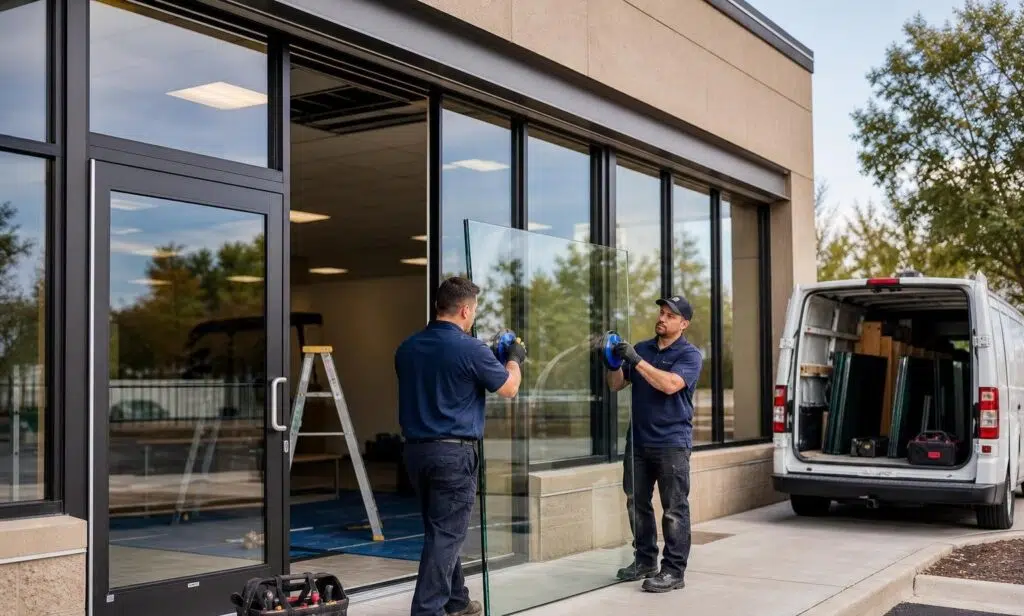
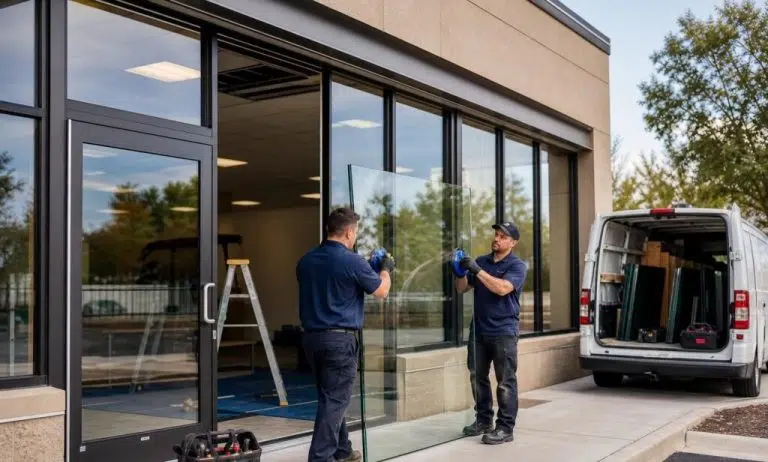
Commercial glass storefront during replacement work

When a storefront fails, the glass is rarely the biggest expense — the interruption is. A boarded-up frontage tells every passer-by you’re closed even when you’re open, and Chicago retailers feel it in walk-in trade immediately. Restaurants lose covers; offices funnel staff and visitors through service doors that were never meant for it.

That’s why our sequencing is built around keeping you trading: we assess and measure within a day or two, secure the opening immediately with non-damaging temporary protection, and schedule the actual installation outside your business hours. Assessment fast, security same-day, fitting after close — your customers keep walking in the whole time.

Our ProcessHow We Install a Storefront:
From Survey to Sign-Off

High-traffic commercial entrance with glass doors
Step 1: Site Survey & Use Assessment

We measure the opening precisely and establish how the entrance is used: daily footfall, delivery access, occupancy classification. That context drives the specification – and it means the reasoning behind your quote is transparent instead of a mystery number.

Glass door with black aluminum frame in an office building
Step 2: System & Hardware Specification

You receive an itemized schedule – not vague descriptions – covering framing profiles, glass types and every piece of hardware down to the threshold. ADA compliance is checked here, on paper, where corrections are free.

Commercial glass storefront during replacement work
Step 3: Fabrication & Interim Security

Glass and framing are fabricated to the recorded dimensions. Meanwhile the opening is secured with methods that don’t damage the framing – and we address appearance too, so a retail frontage doesn’t look boarded up while it waits.

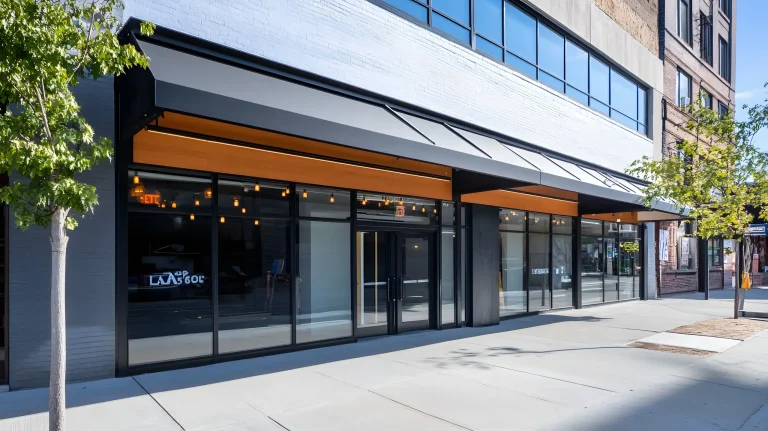
modern-storefront-with-large-windows-black-awnings-scaled
Step 4: Installation Outside Trading Hours

Framing is set, plumbed and leveled; glazing pockets are cleaned; glass is bedded and gasketed; drainage confirmed clear. Then the door: frame square, pivots aligned, leaf hung, closer and weatherstripping adjusted last.

White commercial building with automatic glass doors
Step 5: Commissioning & Compliance Check

We test opening force, closer speeds, latch reliability, clear opening width and threshold height, and verify panic hardware releases in one motion. You receive the full hardware schedule in writing.

Our ProcessHow We Install a Storefront:
From Survey to Sign-Off
Commercial storefront glass installation in Chicago, IL

Five steps, one accountable crew – and your entrance stays in service the whole time.

Commercial Systems and Brands We Install in Chicago

JELD-WEN Commercial Doors

JELD-WEN builds both residential and commercial grades, and the difference matters at a business entrance: commercial-grade cores, edges and hardware preps carry far higher duty ratings. We install and service the commercial line and will tell you honestly when a residential-grade door has been fitted where it doesn’t belong.

Milgard Commercial Series

Milgard’s commercial products often pair aluminum framing with multi-point locking. When a lock point fails, the temptation is to fix just that point — we diagnose the full assembly, because misalignment elsewhere is usually what killed the lock in the first place.

Marvin Windows & Doors

Marvin’s commercial and architectural lines appear across Chicagoland storefronts and mixed-use frontages. We repair and replace Marvin units with matched profiles and glass, keeping sightlines consistent across the elevation.

Andersen Windows & Doors

Andersen units in commercial settings are usually found in offices and converted frontages. We service the complete assembly — glass, hardware, weatherstripping — rather than swapping parts piecemeal.

Pella Commercial

Pella’s commercial systems turn up in restaurants and professional suites across the city. We handle glass replacement, hardware schedules and threshold work while preserving the manufacturer’s sightlines and finishes.

Semco & Other Regional Systems

Chicagoland buildings carry decades of regional brands — Semco, Norco, Hurd, Kolbe and others. Where framing is sound we replace glazing, gaskets and hardware instead of condemning the whole system; where it isn’t, we’ll show you why before quoting a replacement.

Commercial Brands We Install
and Service

Glass Selection, Thermal Breaks — and Who Pays for What

Thermal Breaks & Why Older Framing Sweats

Aluminum conducts heat roughly a thousand times faster than vinyl or timber. Modern storefront systems isolate the inner and outer faces of the frame with a thermal break, which is what keeps interior surfaces warm enough to stay dry through a Chicago winter. A thermal break can’t be retrofitted into an existing frame — but it absolutely should be on the specification sheet whenever framing is being replaced. If your current storefront streaks with condensation every January, that’s the frame talking, not the glass.

Tempered, Laminated and Where Each Belongs

Tempered glass is strong and, when it breaks, crumbles into blunt granules — it’s the standard for doors and sidelites. Its weakness is that the entire panel fails at once, leaving the opening unsecured. Laminated glass holds its fragments on a plastic interlayer, so even a broken panel keeps the weather out and intruders slowed down. For street-facing retail in Chicago, where an out-of-hours break means an unsecured shopfront until morning, we usually recommend laminated for the vulnerable elevations.

Landlord, Tenant and Who Pays for the Glass?

Most Chicagoland commercial leases split responsibility: glass breakage typically falls to the tenant, while the building envelope and structure belong to the landlord. Because our quotes are itemized by component with the cause of failure stated, they double as documentation for exactly that conversation — each party can see what’s theirs.

Projects Background Image Top

Storefront & Commercial Glass
Work We Have Completed

Before

Foggy Patio Door Glass Repair

Before

Carol Stream, IL Patio Door Glass Replacement

/ Carol Stream IL

By System TypeWhich System Suits Which Kind of Building

Storefront isn’t one product — it’s a family of systems, and the right one depends on how your building is used:

Aluminum Storefront Systems

Aluminum Storefront Systems

The default for retail and mixed-use frontages across Chicago. Extruded framing divided into glazed bays, fitted with tempered or laminated units, with a dedicated entrance door frame set within the grid. Durable, serviceable and endlessly configurable.

Glass door with black aluminum frame in an office building

Frameless Glass Entrances

Tempered panels with minimal hardware — striking for offices, showrooms and low-traffic frontages. The honest trade-off: frameless doors tolerate heavy cycling less gracefully than a stile-and-rail door, so we spec them where the traffic justifies the look.

White commercial building with automatic glass doors

Automatic & Accessible Entrances

Sliding or swing operators where footfall or accessibility requires them — grocery, medical, high-volume retail. These carry their own servicing schedule and standby-power considerations for egress routes, and we commission both.

What Storefront & Entrance Installation Covers

Commercial storefront glass installation in Chicago, IL

Our commercial storefront service covers aluminum storefront framing, commercial glass doors, frameless entrances, sidelites, transoms, glazed bays, thresholds and complete hardware schedules — for retail, offices, restaurants, medical suites and mixed-use buildings. Survey, specification, fabrication, interim security, installation and commissioning are all handled by our own crew, so there’s one accountable schedule from first measurement to sign-off.

We install and service commercial storefronts across the city of Chicago and the wider Chicagoland area — including Evanston, Naperville, Schaumburg, Oak Park, Wilmette, Winnetka, Wheaton, Elgin, Joliet and the surrounding suburbs. If your frontage is within reach of our crews, we’ll survey it.

One phone call covers the whole job: measurement, an itemized specification, fabrication, temporary security if your frontage is damaged, installation outside trading hours and a documented commissioning check at the end. If you manage several locations, we can standardize hardware and glass specifications across your portfolio — so every site gets the same entrance, and the same service response.

One Crew for Every Part <span class="darken"><br> of Your Storefront </span>

One Crew for Every Part
of Your Storefront

From a single cracked panel to a complete new entrance system — Apex Window Werks covers the full commercial scope across Chicagoland:

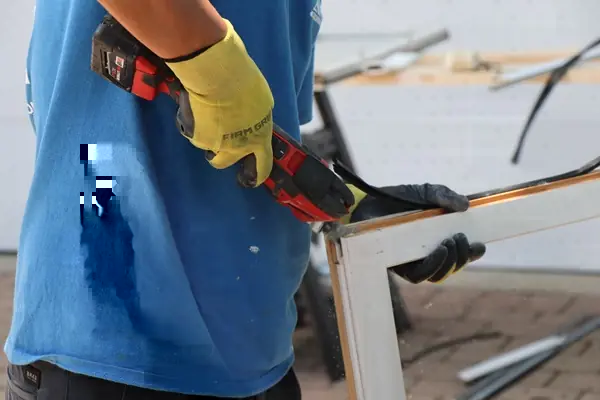
Gloved technician cutting a white window sash with a reciprocating saw
Cracked panels, failed seals and foggy insulated units repaired or replaced in place, with glass matched for size, tint and thickness — the framing stays.
zyro-image (2)
Dropped leaves, worn pivots, faulty closers and panic hardware brought back to smooth, code-compliant operation — often in a single visit.
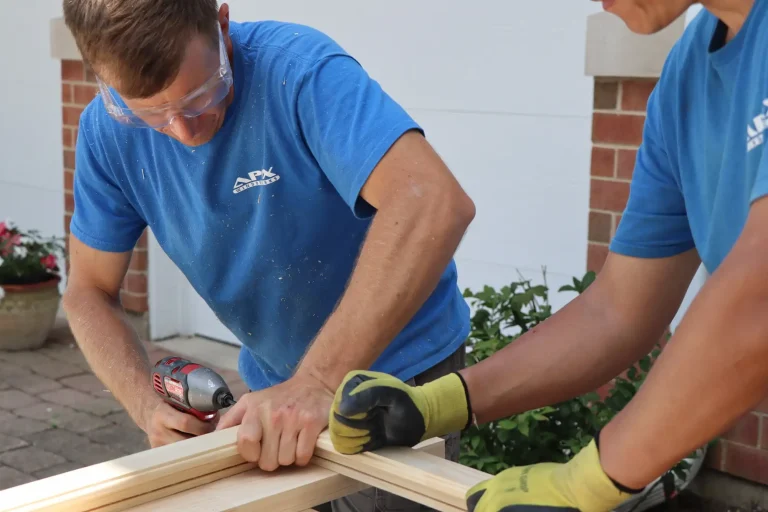
Two technicians drilling and holding a wooden window part
Same-day board-up and securing for broken storefront glass, followed by fabricated replacement panels as soon as they’re ready.
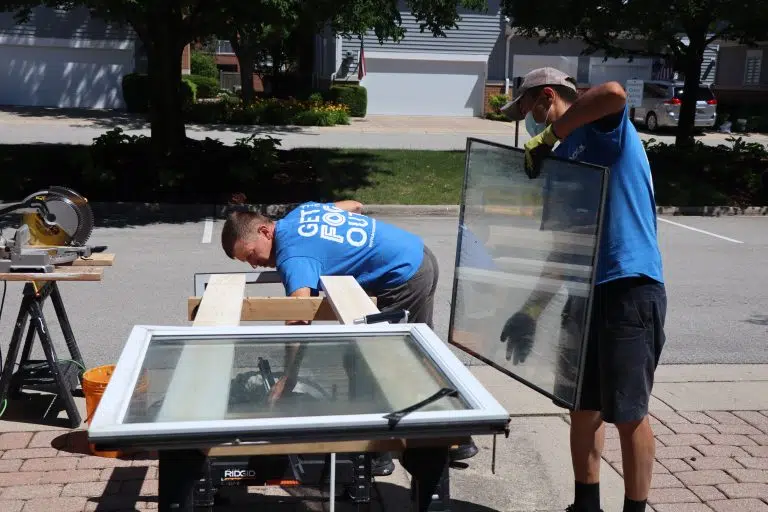
Technicians removing glass from a window sash on an outdoor workbench
Fogged or failed double-pane units swapped for new sealed IGUs that restore clarity and thermal performance without replacing the frame.
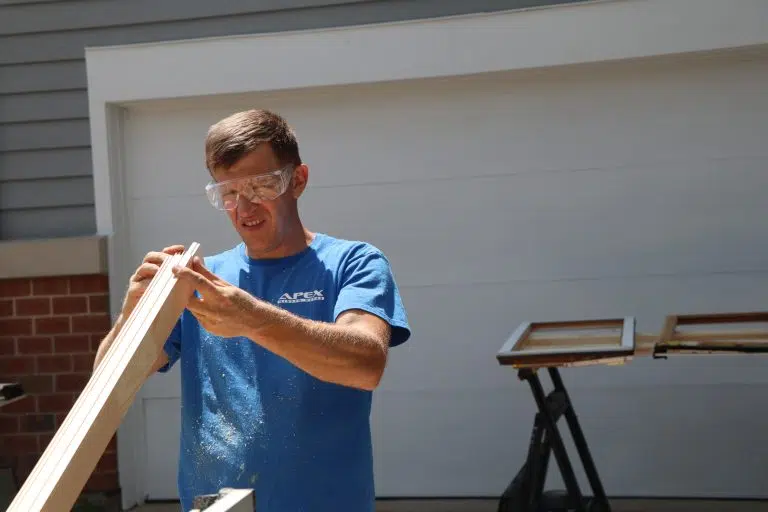
Technician inspecting a freshly cut wooden window part
Tempered, laminated and specialty glass cut and installed to spec for storefronts, sidelites, transoms and interior partitions.
zyro-image (1)
Full window installation and replacement for commercial and mixed-use buildings, matched to your facade and energy requirements.
Planning a New Storefront or Entrance?

Get a transparent, itemized estimate from our Chicago team — free, fast and with no obligation.

Why Chicago Businesses Choose
Apex Window Werks

We're Fast

We're Fast

Time is money, and we won’t waste yours. Our rapid response times mean your door issues are solved before they can impact your bottom line.

We Know Our Stuff

We Know Our Stuff

Our repair technicians undergo rigorous training and have years of experience in commercial door systems. They are equipped with the latest tools and technologies to diagnose and repair issues efficiently.

We Use High-Quality Materials

We Use High-Quality Materials

No cheap parts here. We use only high-quality, commercial-grade materials. Why? Because your business deserves doors that last.

We're Your One-Stop Door Shop

We're Your One-Stop Door Shop

From simple hinge adjustments to complete system overhauls, we do it all. One call to us, and your door worries are over.

We Won't Break Your Bank

We Won't Break Your Bank

Quality doesn’t have to cost a fortune. We offer fair, transparent pricing and always look for the most cost-effective solution for your unique situation.

We Work Around You

We Work Around You

Your business doesn’t stop, and neither do we. We’ll work during off-hours if needed to minimize disruption to your operations.

<span class="white">Our Clients </span><br>Testimonials

Our Clients
Testimonials

5
Great value compared to replacing all windows. Andersen Renewal quoted me $75k plus an additional $25k for Dryvit work on 16 windows [...] It turns out only the lower sashes were rotted and only 2 window pains needed replacement [...] Apex did all the work for less than $20k in 3 days and the windows now look and operate like new. Huge savings. My only negative is that about a week after installation, a metal plate fell off from around the outside of one window. Apex came out immediately and repaired it... checking all the windows to make certain they were effectively caulked. I would recommend anyone with aging wood windows to give APEX a chance. They can save you a fortune.
Chris Ras Chicago, IL
Apex is outstanding! I purchased an older mid-century modern nome with huge windows that were badly neglected, and it turns out the wooden posts and window frames were badly rotted. Apex replaced all my windows and rebuilt the posts and frames for a very treasonable price. The workmanship was first rate and the team of Vasa, Dustin, Filip and Kirill worked extremely hard to complete the job on time and for the agreed upon price. Now my mid-century modern gem looks fantastic! I highly recommend Apex.
James Hannan
5
Had my patio sliding door repaired last month (03/18/23). The quality of work was worth every penny. It saved me from dealing with the expense of full door replacement. Also, I’m very pleased with the professionalism & efficiency of Dima & Nick. They complement each other & work as a team. In addition, working in extremely cold weather didn’t keep them from delivering their commitment. Big thanks to you both. Also, to Alex who did the initial inspection & assisted me in the process. So glad I found this company. I would highly recommend it to anyone looking for door/window repair. More power to APEX Window Werks.
Jeannie Olitan
5
Very easy to work with from the estimate to the completion. Had foggy glass replaced in four windows and a sliding door. The young man who did the work was very neat and courteous and did a great job. I would recommend Apex Window Werks.
Cynthia Sander

Frequently Asked Questions

How long will my business be closed during a storefront installation?

Usually not at all. We measure and order first, keep your existing frontage in service while the glass and framing are fabricated, then fit outside trading hours. A single door or glazing bay typically takes a few hours; a full storefront replacement is staged across visits so the entrance stays usable in between.

Does a new commercial entrance in Chicago have to be ADA compliant?

If it serves the public, yes — clear opening width, threshold height and one-handed hardware operation all apply. Existing entrances have somewhat more latitude, but anything we install new is specified to comply. We check compliance at the specification stage, on paper, not after the door is hung.

Can you match a new door or glass panel to my existing storefront?

In most cases, yes. Framing finish, glass tint, coating and hardware finish can all be matched so the new work blends in. The honest caveat: some discontinued anodized finishes can no longer be reproduced exactly — we’ll tell you before you order, not after.

Who is responsible for the storefront — landlord or tenant?

It depends on your lease. The common split is that glass breakage falls to the tenant while the building envelope and structure are the landlord’s. Our estimates are itemized by component with the cause of failure stated, which makes it much easier to establish who is responsible for what.

Can you board up a broken storefront while the new glass is being made?

Yes. We provide same-day securing using methods that don’t damage the surrounding framing, and for retail frontages we can address appearance as well, so you don’t trade behind bare plywood. The fabricated glass follows as soon as it’s ready.

Let’s Build Your New Storefront Together

Let’s Build Your New Storefront Together

From first measurement to final commissioning — one Chicago crew, one accountable schedule. Call us at (847) 557-9600 or send the form below and we’ll get back to you the same business day.
By providing a telephone number and submitting the form you are consenting to be contacted by SMS text message. Message & data rates may apply. Reply STOP to opt out of further messaging.
📞